OUR SERVICES




Customs Clearance
Who is a Customs Broker?
A customs broker is a crucial professional or entity that plays a vital role in facilitating the smooth and efficient movement of goods through international borders on behalf of importers and exporters. A customs broker serves as an intermediary between the importers/exporters and the various government agencies involved in regulating the import and export of goods.
Services provided by a Customs Broker:
At AR Shipping we provide numerous services classified under Customs clearance.
Expertise in Customs Regulations: We possesses in-depth knowledge of the ever-changing customs regulations and trade laws of different countries and keep ourselves updated with the latest customs procedures and ensure that the shipments comply with all legal requirements.
Documentation and Paperwork: Shipping goods across borders involves a significant amount of paperwork. We assist our clients with submitting the necessary documentation, such as import/export declarations, certificates of origin, and other required compliances like LMPC,EPR,PPQ, Animal Quarantine etc.
Smooth Customs Clearance: We act as a liaison between the clients and the customs authorities, ensuring that shipments move seamlessly through the customs clearance process, resolving any issues that may arise during inspections or assessments. Thereby, ensuring that their goods cross borders smoothly and efficiently.
Besides usual Customs clearance of Import and Export shipment we provide assistance in undermentioned activities:
- Seeking Self sealing permission from Customs authorities for eligible exporters
- Seeking permission for manufacturing under bong under MOOVR scheme
- Follow up for IGST refunds
- Door to door cargo movement both – Import & Export
- LMPC registration
- EPR compliance
- ICEGATE registration
- AD code / IFSC registration.
- BIS registration

Documentation and Compliance

Tariff Classification

Valuation

Custom duties & taxes
Custom Clearance
Who is a Custom Broker?
A custom broker is a crucial professional or entity that plays a vital role in facilitating the smooth and efficient movement of goods through international borders on behalf of importers and exporters.A custom broker serves as an intermediary between the importers/exporters and the various government agencies involved in regulating the import and export of goods.
Services provided by a Custom Broker:
At AR Shipping we provide numerous services classified under Custom clearance.
Expertise in Customs Regulations: We possesses in-depth knowledge of the ever-changing customs regulations and trade laws of different countries and keep ourselves updated with the latest customs procedures and ensure that the shipments comply with all legal requirements.
Documentation and Paperwork: Shipping goods across borders involves a significant amount of paperwork.W assists our clients with submitting the necessary documentation, such as import/export declarations, certificates of origin, and other required permits.
Smooth Customs Clearance: We act as a liaison between the clients and the customs authorities, ensuring that shipments move seamlessly through the customs clearance process, resolving any issues that may arise during inspections or assessments. Thereby, ensuring that their goods cross borders smoothly and efficiently.
Freight Forwarding
A freight forwarding service provides essential logistical support to businesses and individuals engaged in international trade. Operating as an intermediary, a freight forwarder bridges the gap between shippers and various transportation carriers, streamlining the movement of goods from one location to another.
Multimodal Transportation Solutions: We offer a comprehensive range of transportation options, including sea, air, road, and rail, to cater to diverse shipping needs. After assessing the specific requirements of customers we suggest the most efficient and cost-effective transportation mode.
Efficient Cargo Consolidation: We at AR Shipping often consolidate multiple smaller shipments into larger ones to optimize space and reduce shipping costs.
Real-time Shipment Tracking: We provide our clients with real-time tracking and visibility of shipments. Through Whatsapp, clients can monitor their cargo’s progress at each stage of the journey, offering peace of mind and improved supply chain management.


Warehousing Under Bond (MOOWR SCHEME)
The Government of India re-introduced MOOWR scheme in 2019, through Manufacture and Other Operations in Warehouse Regulations, 2019.
MOOWR has been an industry friendly initiative, which can significantly benefit manufacturers/processors of goods in India. MOOWR has limited but certain essential compliance requirements together with customs duty exemption on input/capital goods used in the export product. It also allows deferment of Customs duty on the inputs used in the manufactured/processed goods sold into domestic market.
MOOWR scheme comes with a host of benefits, which includes –
• Customs Duty deferment on import of Raw materials and capital goods
• No Customs duty on input/capital goods if manufactured goods are exported by MOOWR
• No upper time limit for storage of imported goods (except trading activity)
• Perpetual validity of the license without the need for renewal
• Single point of contact for all approvals
• MOOWR Unit need not be set-up in any zone for export
• No physical control by Customs authorities
• Seamless warehouse-to-warehouse transfers
Extended Producer Responsibility(EPR)
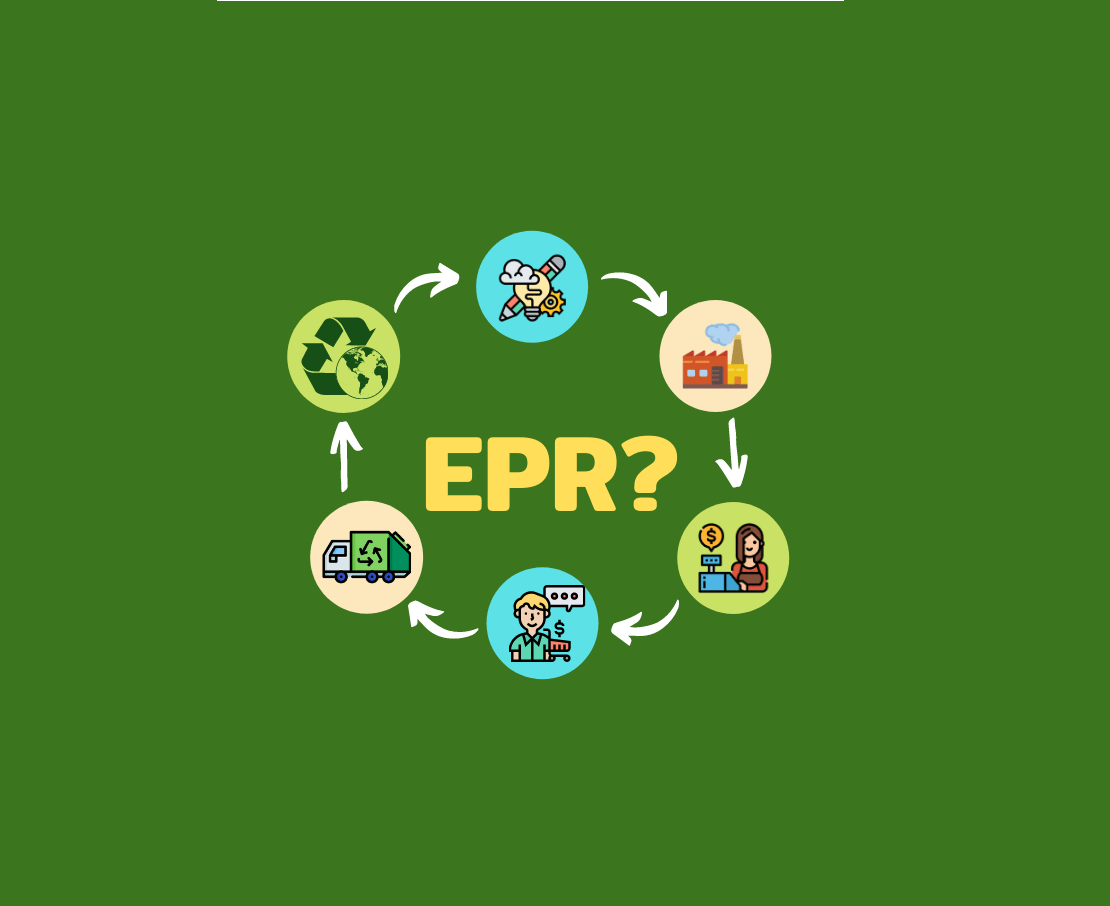
What is EPR?
EPR stands for Extended Producer Responsibility, and the EPR Certificate is compulsory for Indian Manufacturers or Importers for E-waste management. EPR Authorization is provided by CPCB or Central Pollution Control Board under MoEFCC, Government of India.
Where is EPR applicable?
EPR Authorization is mandatory for producers / importers of electrical items, single use plastics , Battery and Tyre in India. The provisions regarding EPR Authorisation are mentioned under the E-waste management rules and plastic wastes management rules
As per the recent amendments to the Plastics Waste Management Rules, 2016, any person who imports a plastic packaging product or products with plastic packaging (carry bags, multilayered packaging, plastic sheets) is under an obligation to get registered on the centralized portal developed by the CPCB, without which the importers cannot clear their shipment/ consignment from customs.
Types of ERP Certificate Authorization
- EPR Authorization for E-waste.
- EPR Authorization for Plastic Waste.
Category-I: Rigid plastic packaging.
Category-II: Flexible plastic packaging of single or multi-layer plastic sheets, covers, and the likes.
Category-III: Multi-layered plastic packaging.
Category-IV: Plastic sheet and similar material used for packaging purposes as well as carry bags made of compostable plastics
- EPR Authorization for Battery Waste.
- EPR Authorization for Tyres Waste.
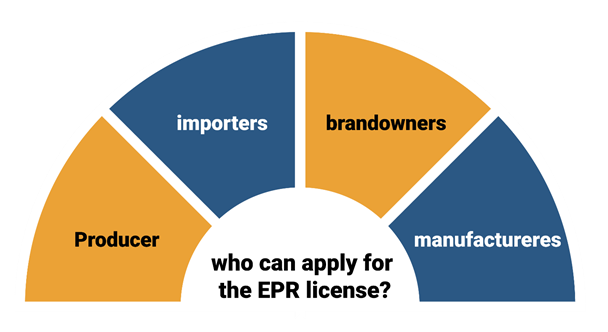
EPR refers to the concept where producers or businesses are held accountable for the entire lifecycle of their products, including proper waste management and disposal.
In today’s environmentally responsible landscape, adhering to EPR compliances has become a paramount concern for shipping websites. EPR ensures that businesses take responsibility for the environmental impact of their packaging materials and waste generated throughout the supply chain. Implementing EPR programs leads to a reduction in carbon footprint, promote sustainable practices, and engage in effective waste management initiatives.
Non-compliance with EPR regulations can lead to potential fines and legal implications. To avoid such risks, it is essential for these businesses to prioritize EPR compliances, embrace eco-friendly packaging solution
LMPC
Do you import pre-packaged goods for sale and distribution? If you do, then you need to know that you cannot import these goods into India without a Legal Metrology Registration Certificate, commonly called a Legal Metrology Packaged Commodity (LMPC) certificate. An LMPC certificate is an import requirement under the Legal Metrology Act, 2009, and Legal Metrology (Packaged Commodity) Rules, 2011
LMPC stands for Legal Metrology Packaged Commodity. According to Legal Metrology Packaged Commodity rules enacted by the Department of Consumer Affairs, it is mandatory for companies in the business of importing pre-packaged goods to India subject to few exemptions.
What are pre-packaged goods?
The Act defines a pre-packaged commodity as “a commodity which, without the purchaser being present, is placed in a package of whatever nature, whether sealed or not, so that the product contained therein has a pre-determined quantity”. Some examples of pre-packaged goods include baby food, fuel, food products, paint, cement in bags, cables, wires, chemicals, wool and so on.
Here’s a simple explanation. When we go to the market, we buy goods that are either sold loose or pre-packed. The loose goods (fruits, vegetables, rice, flour) are weighed in our presence. We can personally determine their quality. We also know the identity of the seller. But when we buy pre-packaged goods, we cannot be sure of the product’s weight, freshness, or safety. Nor do we know the manufacturer. The Legal Metrology Act arms the customer with the information required (weight, quantity, price, expiry date, etc) to make a clear buying decision.
What is an LMPC certificate for importers?
Traders who import pre-packaged goods for sale or distribution must make an application to the Director of Legal Metrology in the Central government or the Controller of Legal Metrology in the state to have their name and address registered. If the application is accepted, the registering authority (Director/Controller of Legal Metrology) will register the importer’s name and address and grant them an LMPC certificate. An LMPC registration is valid for a minimum of one year and a maximum of five years.
If you intend to sell your pre-packaged goods in a single state, you must apply to the controller in that state. If you plan to sell in multiple states, you’ll need to register with the director at the Centre.
Note: Apart from importers, manufacturers and packers of pre-packaged goods also require LMPC certificates.
Importer’s responsibilities
To receive an LMPC certificate, importers must ensure their pre-packaged goods carry a declaration with the following information:
• Name and address of the importer
• Name and address of the manufacturer
• Common or generic name of commodity contained in the package
• Country of origin of the commodity
• Net quantity in terms of standard unit of weight, measurement, or number
• Month and year of import
• Month and year of manufacture
• Maximum retail price (MRP)
• Dimensions of the commodity, if relevant
• Name, address, and telephones number (and email address, if available) of person/office to be contacted in case of customer complaints
The declaration differs from product to product. It must be printed in Hindi or English. And, there are rules specifying how the declaration must be displayed on the packaging or affixed to it, as well as detailed instructions regarding each information point. To be compliant, read the Legal Metrology (Packaged Commodity) act.
Why Do Importers Need It?
The Legal Metrology Registration Certificate, also called LMPC certificate, is mandatory for Indian importers of pre-packaged goods. Failure to register can lead to the goods being seized by customs.
BIS (Bureau of Indian Standards)
For export to India, manufacturers need BIS certification (ISI) under Foreign Manufacturers Certification Scheme (FMCS), or BIS registration (CRS) for certain products. The BIS Certification is obligatory for these products, so that they can be introduced and sold on the Indian market. BIS Certification India or BIS Registration issued by the Bureau of Indian Standards (BIS) ensure the quality, safety and reliability of products in accordance with Indian Standards (IS).
The Bureau of Indian Standards (BIS) is the national certification body in India under the umbrella of the Indian Ministry of Consumer Affairs, Food & Public Distribution. On April 1, 1987, it effectively replaced the Indian Standards Institution (ISI) organization and took over their functions.
Is BIS certificate required for import?
BIS certification is a compliance requirement for a variety of imported products in India. It is a mark of quality assurance that verifies that the product complies with Indian safety and performance standards
So BIS licence is mandatory for the products which are covered under quality control order issued by Government of India from time to time
Types of certificate for bis for Importers
Depending on the type of product, there are two different BIS registration and certificate available
1.Compulsory Certification ( https://www.crsbis.in/BIS/about-crs.do)
BIS certification scheme is basically voluntary in nature. However, for a number of products compliance to Indian Standards is made compulsory by the Central Government under various considerations viz. public interest, protection of human, animal or plant health, safety of environment, prevention of unfair trade practices and national security. For such products, the Central Government directs mandatory use of Standard Mark under a Licence or Certificate of Conformity (CoC) from BIS through issuance of QCOs.( https://www.bis.gov.in/product-certification/products-under-compulsory-certification)
2. Foreign Manufacturers Certification Scheme (FMCS):
https://www.bis.gov.in/product-certification/importers/
Under the Foreign Manufacturers Certification Scheme (FMCS), the BIS issues a certification of bis to foreign applicants or manufacturers. In order to allow international applicants to receive and use the ISI mark on their products, the FMCS system was initially created in 2000. All products can receive certification under this scheme, with the exception of the MeitY-notified electronics and IT equipment.
• Bureau of Indian Standards (BIS) has been operating a Foreign Manufacturers Certification Scheme (FMCS) since the year 2000 under BIS Act, 2016 and Rules & Regulations framed there under.
• Under FMCS, licence is granted to a Foreign Manufacturer for use of Standard Mark on a product that conforms to an Indian Standard..
• The Scheme is applicable for grant of licence for all products except Electronics & IT Goods notified by MeitY
• The licence is granted by Foreign Manufacturers Certification Department (FMCD) located at BIS Headquarters, New Delhi.
• Click here to read more about FMCS. — https://www.bis.gov.in/fmcs/certification-process/aboutfmcs/